
Your design and your decisions outlive the handover.
Everything you worked out on this project is still there for whoever picks it up next.
Request a DemoEverything your practice already knows, in one place.
The reasoning goes
with the model.
What you decided and why leaves your office attached to the elements, instead of an email thread nobody inherits.
Everything the last
project learned.
Precedent and standards, available before you start rather than remembered by whoever happens to be in the room.
You stop re-explaining
your standards.
Check a design against the code and the way your practice does things, without briefing anyone.
systems
- revit
- rhino
- autocad
- navisworks
- acc
- bluebeam
- doc control
- gis
- m365
- project accounting
records
- drawings
- specifications
- design intent
- calculations
- coordination models
- submittal reviews
- rfi responses
- addenda
- authority approvals
- as-designed
people and judgement
- institutional knowledge
- design standards
- detail libraries
- discipline workflows
- review and sign-off
- lessons learned
- judgement
your world model.
Four products for designers.
Answers
Ask what the last project cost and what governed it, without sending anyone to look.
Learn more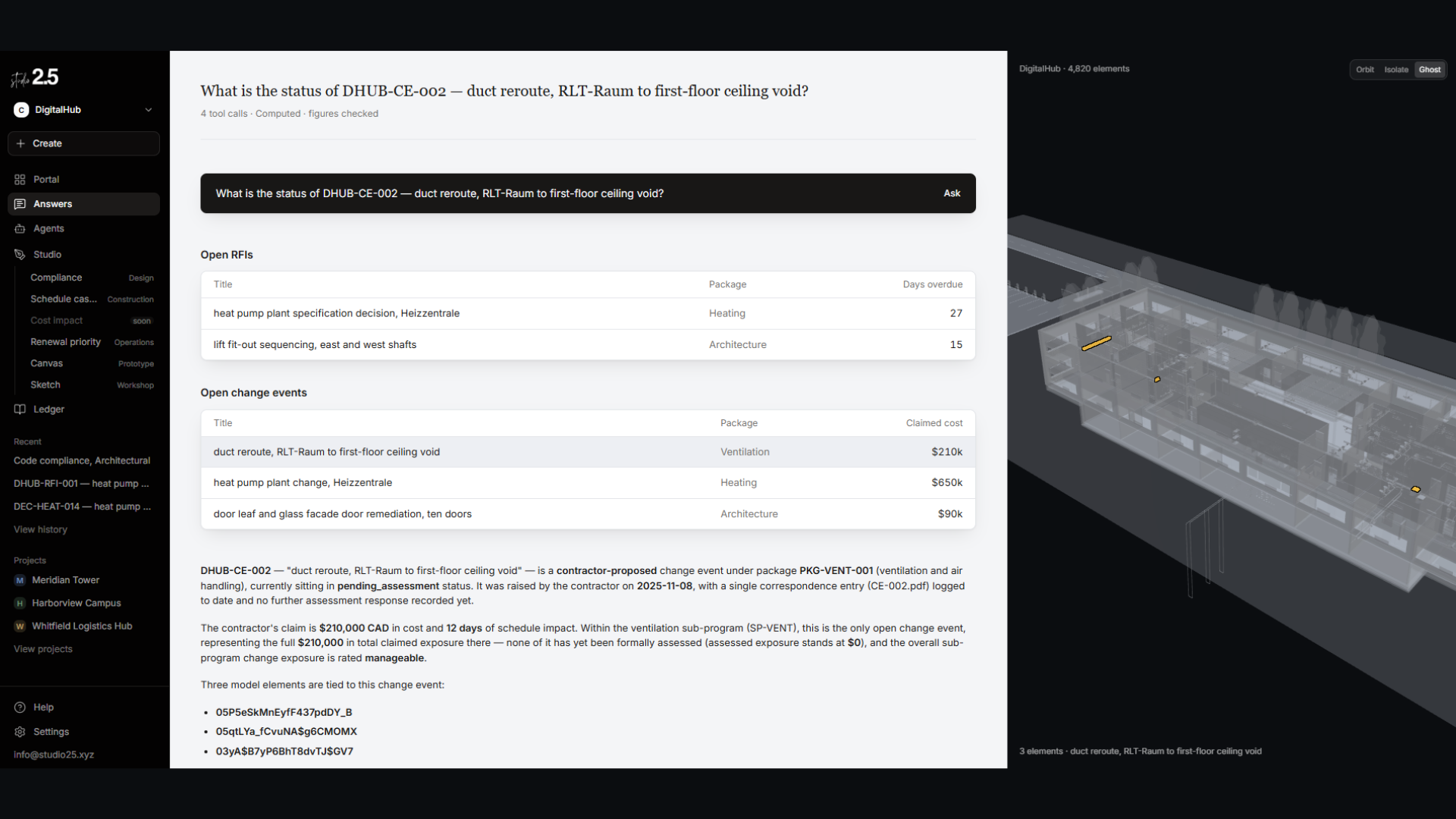
Studio
Build the check your practice actually runs, once, and use it on every project after.
Learn more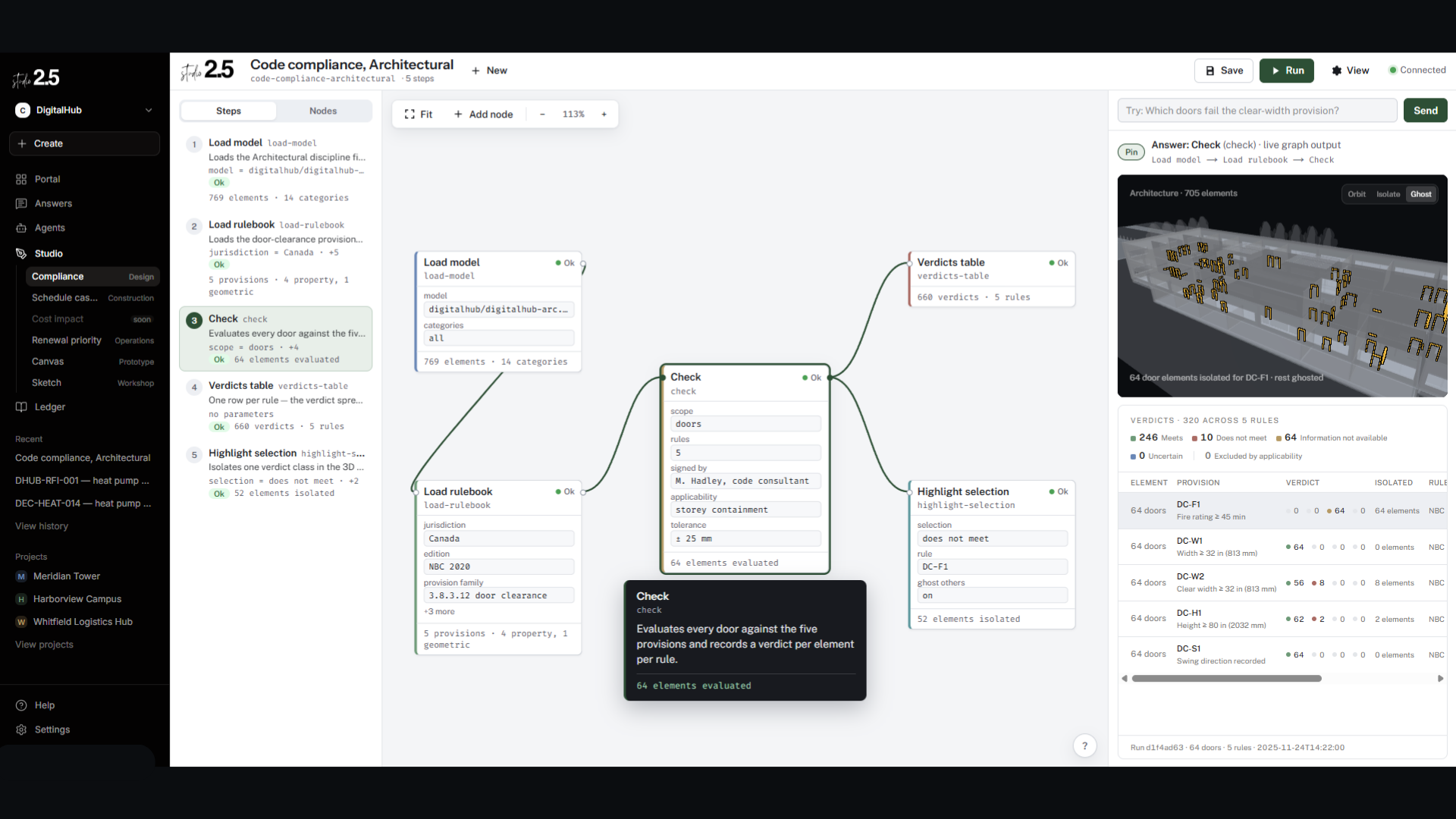
Ledger
Every decision kept with the evidence and the signature, so the reasoning survives the handover.
Learn more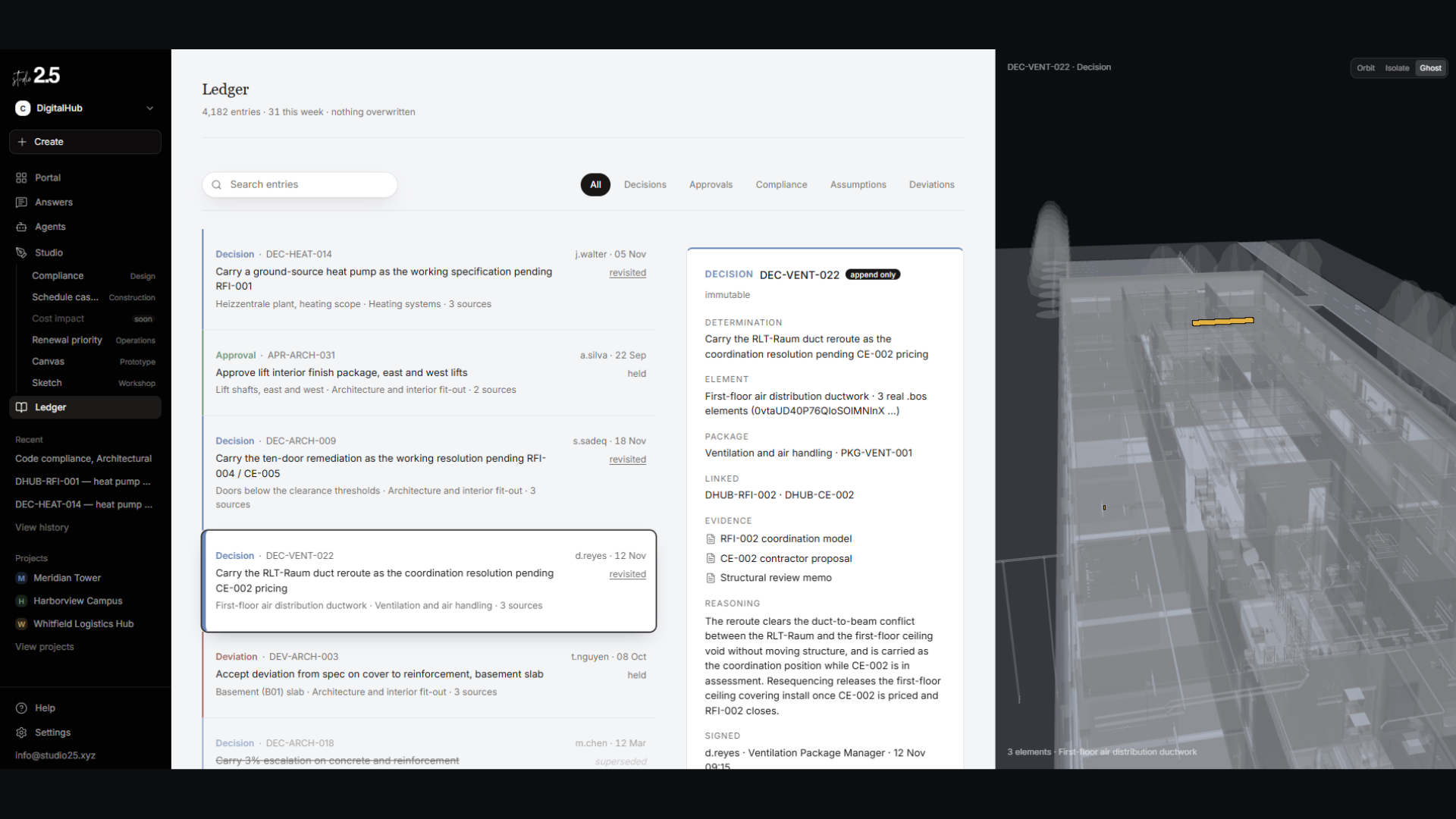
When the claim arrives.
Standard of care is a question about what you knew and what you weighed at the time. The record has both.
See it run.
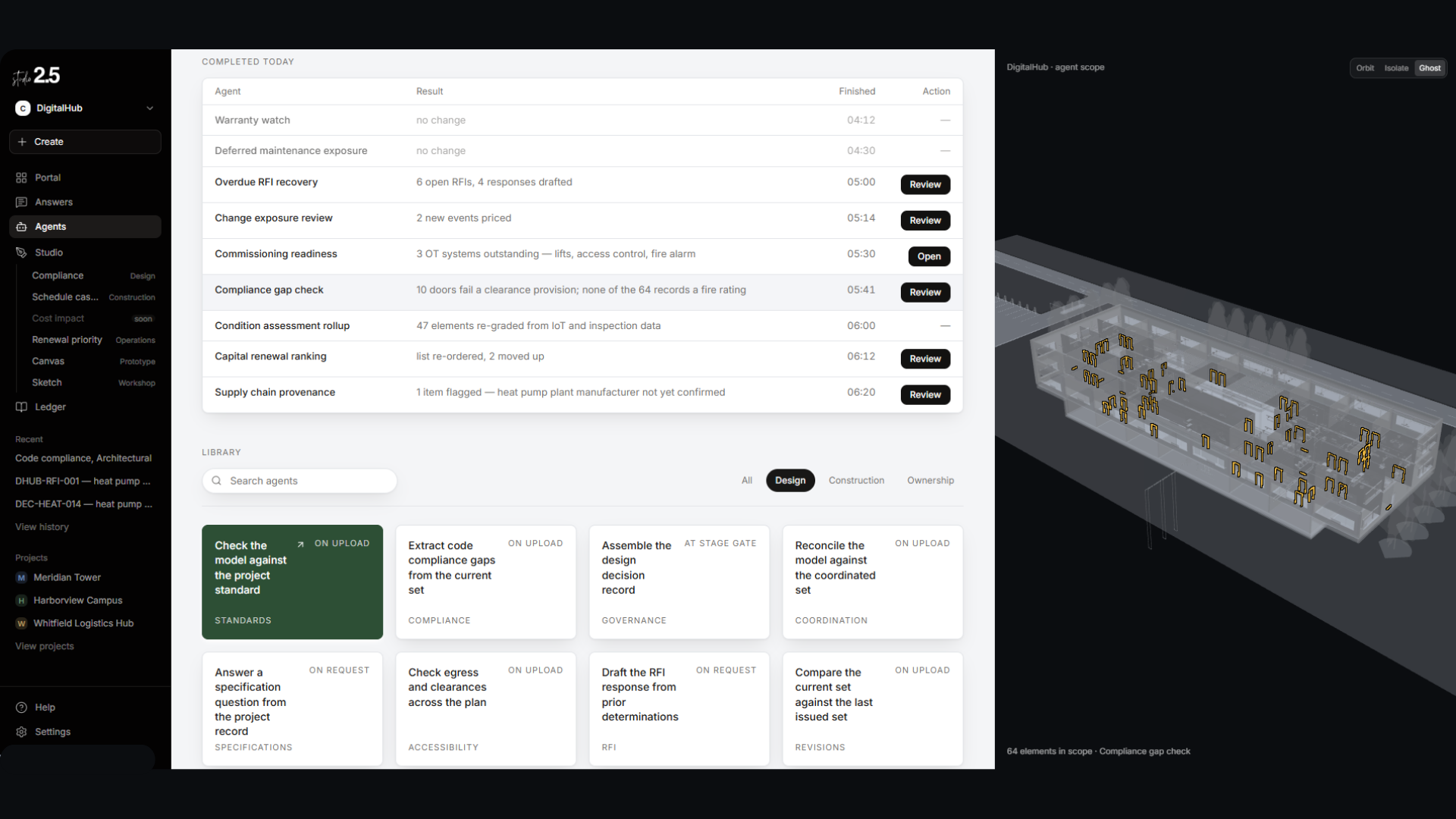
Agents doing the work you would otherwise send someone away for.
Check a design against the standard
Against the code and the client's brief, with the clause behind every finding.
Price an option before you commit to it
What this choice costs to build and to run, against what your past projects actually cost.
Assemble the design decision record
What was decided, what was weighed and what was rejected, ready to hand over at the end.